

Doing AI Differently
An International Initiative Integrating Humanities into the Core of AI Development
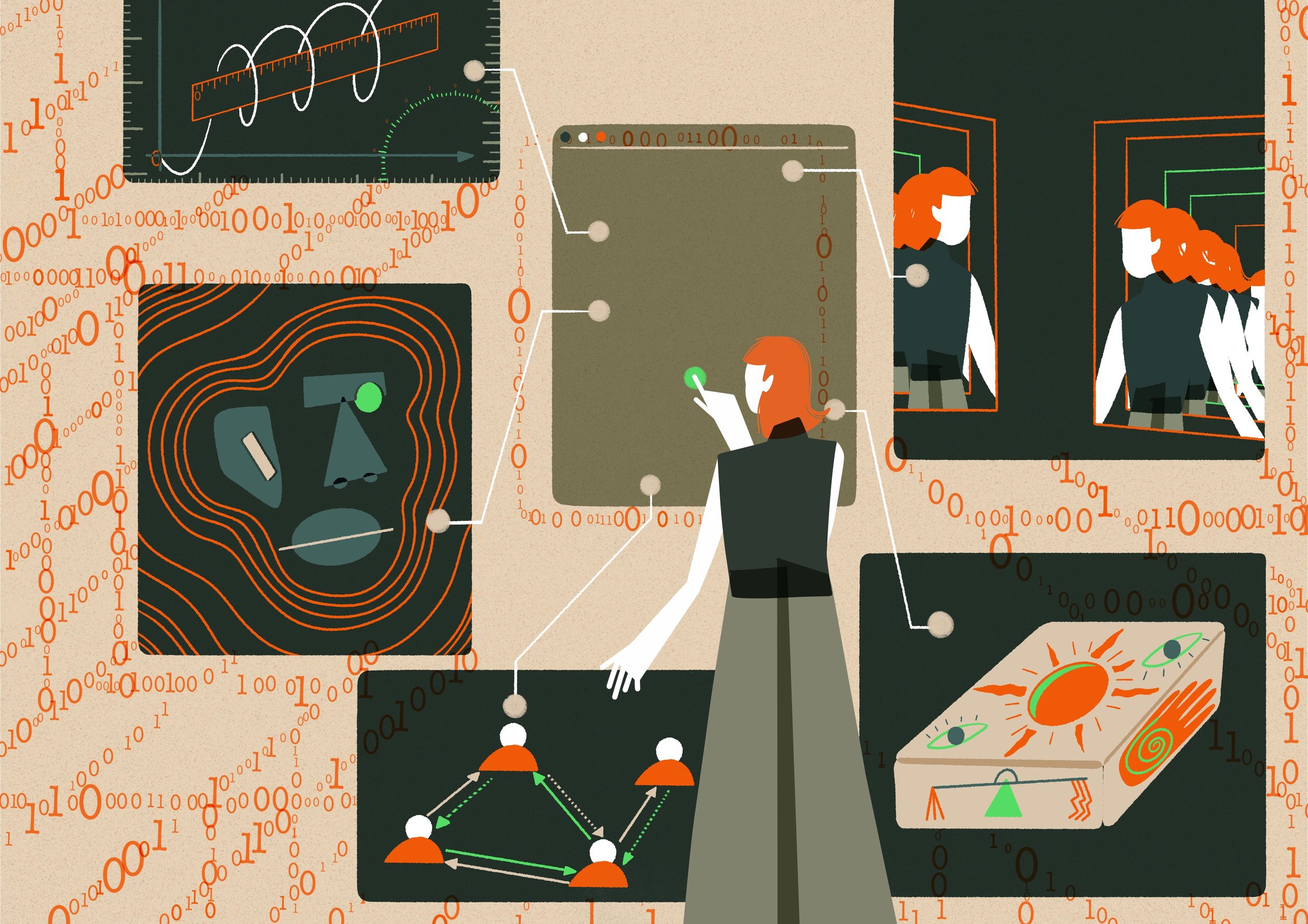
Yutong Liu & Kingston School of Art / Better Images of AI/ Talking to AI 2.0 / CC-BY 4.0
Rethinking AI via the Humanities
The Doing AI Differently initiative challenges traditional approaches to AI development by positioning humanities perspectives as integral, rather than supplemental, to technical innovation.
Led by researchers within the Sustainability Mission at The Alan Turing Institute and at University of Edinburgh, our goal is to build a community of scholars from diverse disciplinary backgrounds, with a special focus on bringing humanities and arts contributions further up the development pipeline, to the fundamental design of AI technology itself. We believe the most important questions in AI aren't only technical; they're interpretive, cultural, and human.
Our white paper, Doing AI Differently: Rethinking the Foundations of AI via the Humanities, sets out the research vision underpinning this initiative. Co-authored by 50+ researchers spanning 6 continents, it identifies a foundational gap: AI systems increasingly produce cultural outputs such as text and images yet lack the frameworks to interpret the cultural content they generate and encounter. Current AI is shaped by narrow operational metrics that fail to reflect the diversity, ambiguity, and richness of human experience. The white paper argues that bringing humanities perspectives upstream is not just valuable but necessary — and that this is a critical moment to act, as early design choices will shape AI's trajectory for years to come.
Read our white paper.
Interpretive Technologies
The outputs of today's AI systems look a lot more like the cultural artefacts traditionally studied by humanists — texts, images, narratives — than they do equations or spreadsheets. This is our core insight: AI systems both perform interpretation and are increasingly capable of doing it well.
Interpretive Technologies is an emerging field of research that asks what happens when we take that seriously. How do we build AI systems that treat knowledge as situated and multiple, rather than objective and monolithic? And how do we bring the rich methodological traditions of the humanities — close reading, cultural context, aesthetic judgment — into the design of the technology itself?
AI Humanities Sandpit
Interpretive Technologies is now a recognised programme at UKRI, with the Artificial Intelligence Humanities Sandpits – directed by Professor Drew Hemment as part of Doing AI Differently – funded by the Arts and Humanities Research Council, the Engineering and Physical Sciences Research Council, and the Social Sciences and Humanities Research Council of Canada, with a total fund of £1.25 million. The sandpit brought together 61 participants from across the UK, Canada, and the US through a series of in-person and virtual workshops, putting humanities insights and methodologies at the heart of AI research and development. The response was striking: over 900 researchers applied for those 61 spots. Teams formed and developed project proposals through a facilitated process, leading to up to five funded collaborative research projects to begin in October 2026.

Computational Hermeneutics
Our flagship paper, Computational Hermeneutics: Evaluating Generative AI as a Cultural Technology, makes the case that AI systems should be evaluated not just for what they get right, but for how they interpret. Bringing together over 38 authors from across the humanities, social sciences, and AI research, the paper develops a framework for assessing generative AI as a cultural technology — one that produces meaning, not just output. It asks what it would look like to hold AI to humanistic standards of depth, nuance, and contextual sensitivity.
Read our paper here.

Culture x AI ICML 2026 Workshop
In July 2026, we are hosting a workshop at the International Conference on Machine Learning (ICML) in Seoul. The workshop brings together researchers from machine learning, the humanities, arts, and qualitative social sciences to explore a constructive vision for cultural AI. Our aim is the cultural aspects of AI technology in a way that not only seeks to avoid failure but gives a more robust definition of success.
Read more about the workshop here.
Substack: Coming Soon
We are launching a Substack to share ideas, updates, and perspectives from the Doing AI Differently community. It will be a space for the kind of thinking that doesn't fit neatly into a paper or a grant application: provocations, reflections, and conversations across disciplines.
Sign up to be notified when we launch.